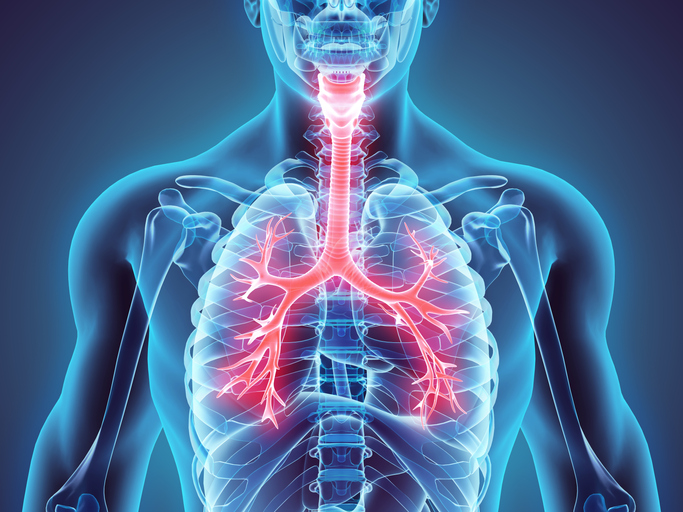
The respiratory tract is divided into the upper respiratory tract (nose, paranasal sinuses, and pharynx) and the lower respiratory tract (larynx, trachea, bronchi, and the lungs themselves). The airways in the narrower sense comprise the trachea and the bronchi. They transport air from outside to the alveoli during inhalation (inspiration) and back again during exhalation (expiration). Histologically, the bronchi have a single-layered ciliated epithelium with goblet cells. Typically, the bronchi have cartilaginous components in the wall that prevent the bronchus from collapsing during inhalation and exhalation.
Diseases of the Respiratory Tract (from the Nasal Cavity to the Alveoli):
Acute Respiratory Diseases (colds, rhinitis, acute sinusitis, acute otitis and pharyngitis, acute tonsillitis, common cold, influenza, acute bronchitis)
Allergic Lung Diseases
Alveolitis
Asbestosis
Bronchial Asthma
Chronic Sinusitis
Gastroesophageal Reflux Disease
COPD, Chronic Bronchitis and Pulmonary Emphysema
Pneumonia
Bronchiectasis
Tumors of the Respiratory Tract (malignant and benign) from the nose to the alveoli.